
At Springfield Prep, we’ve always cared deeply about student learning. Every year, as part of our new-staff training, we unpack a quote from celebrated basketball coach John Wooden: "You haven't taught unless they've learned." We focus on co-teaching, lesson preparation, and data analysis to better understand and support our students' learning. But this year, for the first time, we're taking a closer look at the cognitive processes that make learning possible through our whole-school professional development focus on the Science of Learning.
We sat down with Chief Academic Officer Jess Yiannos, who is leading this work after immersing herself in the latest research and rethinking some of her own beliefs about effective teaching.
Q&A with Jess Yiannos
First, what exactly is the Science of Learning?
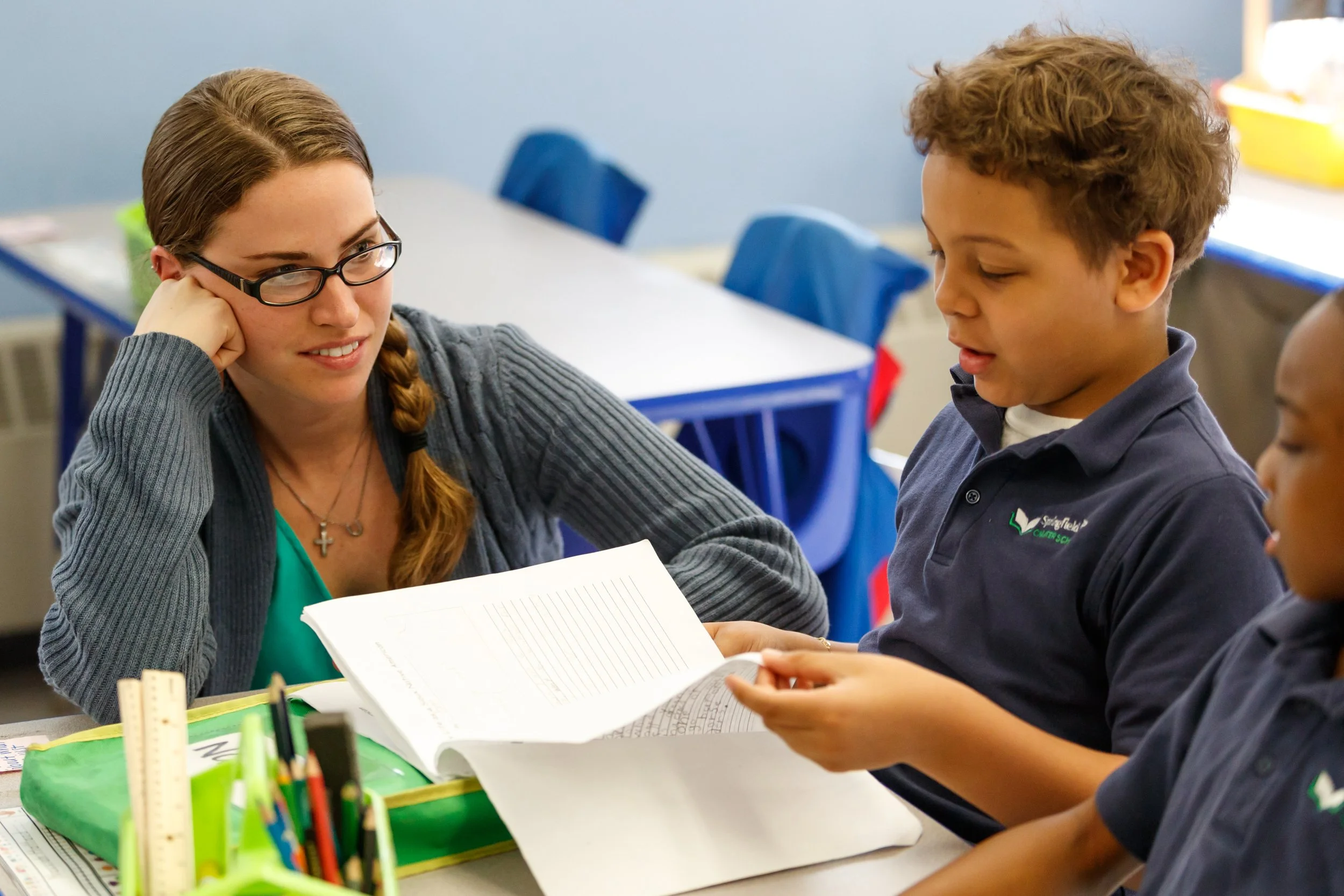
Chief Academic Officer, Jess Yiannos
Jess: It is kind of buzzwordy now, but I think it also carries meaning. It's a body of research that incorporates many different fields related to learning and education, like cognitive science and behavioral science. If I were trying to explain it to someone not familiar with the term, I would say the Science of Learning is using what's been proven, both in schools and in research, to try to put forth the best curriculum and instruction that we can for kids. So the big picture here is evidence, not vibes.
What are some of the key principles teachers are learning about this year?
Jess: One of the most important ideas we’re learning this year is cognitive load theory. In short, it’s understanding just how brains move information from working memory to long-term memory, and for learning to be actual learning, it has to be a change in long-term memory. It can't just be in-the-moment performance.
Once we covered how the brain learns, we started to explore what the process is for a person to learn anything, from riding a bike, learning a new language, to cooking a meal, so that teachers understand how to support someone who is a novice, and then what to change as that person becomes more of an expert in that thing. This progression is called the Instructional Hierarchy, and it’s a helpful and powerful tool.
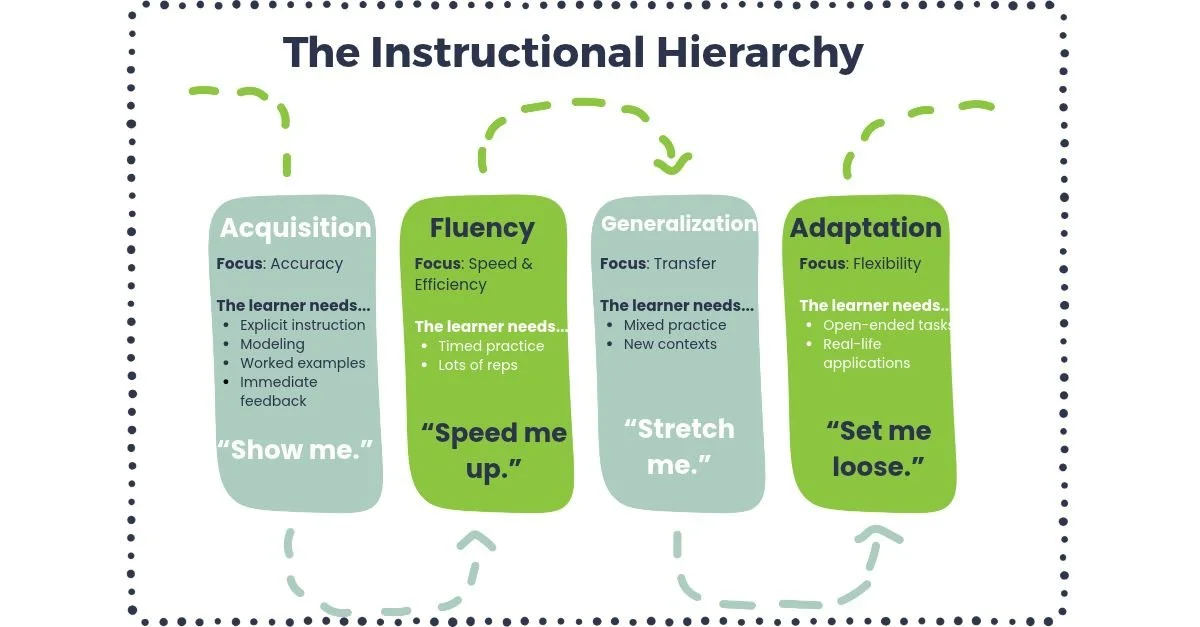
Haring, N.G., Lovitt, T.C., Eaton, M.D., & Hansen, C.L. (1978). The fourth R: Research in the classroom. Columbus, OH: Charles E. Merrill Publishing Co.
We want teachers to make sure that our students are getting enough support at that early acquisition stage, and then getting enough opportunities for practice in the fluency stage, and then enough opportunities to apply it later on in the generalization and adaptation phases.
The next step is to talk about how to keep new information and skills, once you've taught it well, how to keep those things retrievable and useful. We need to know how students can pull things out of their memory now that they've created those long-term memories, and recognize how retrieving that information actually also solidifies it even more. It’s recalling and informally quizzing for the purpose of learning, not just the purpose of assessing the learning.
Can you give an example of how these ideas might translate into classroom practice?
Jess: The first session when we talked about cognitive load theory wanted to build some understanding about how much new information kids can take in at once, and all of the different competing things that are happening around kids that we might not be considering.
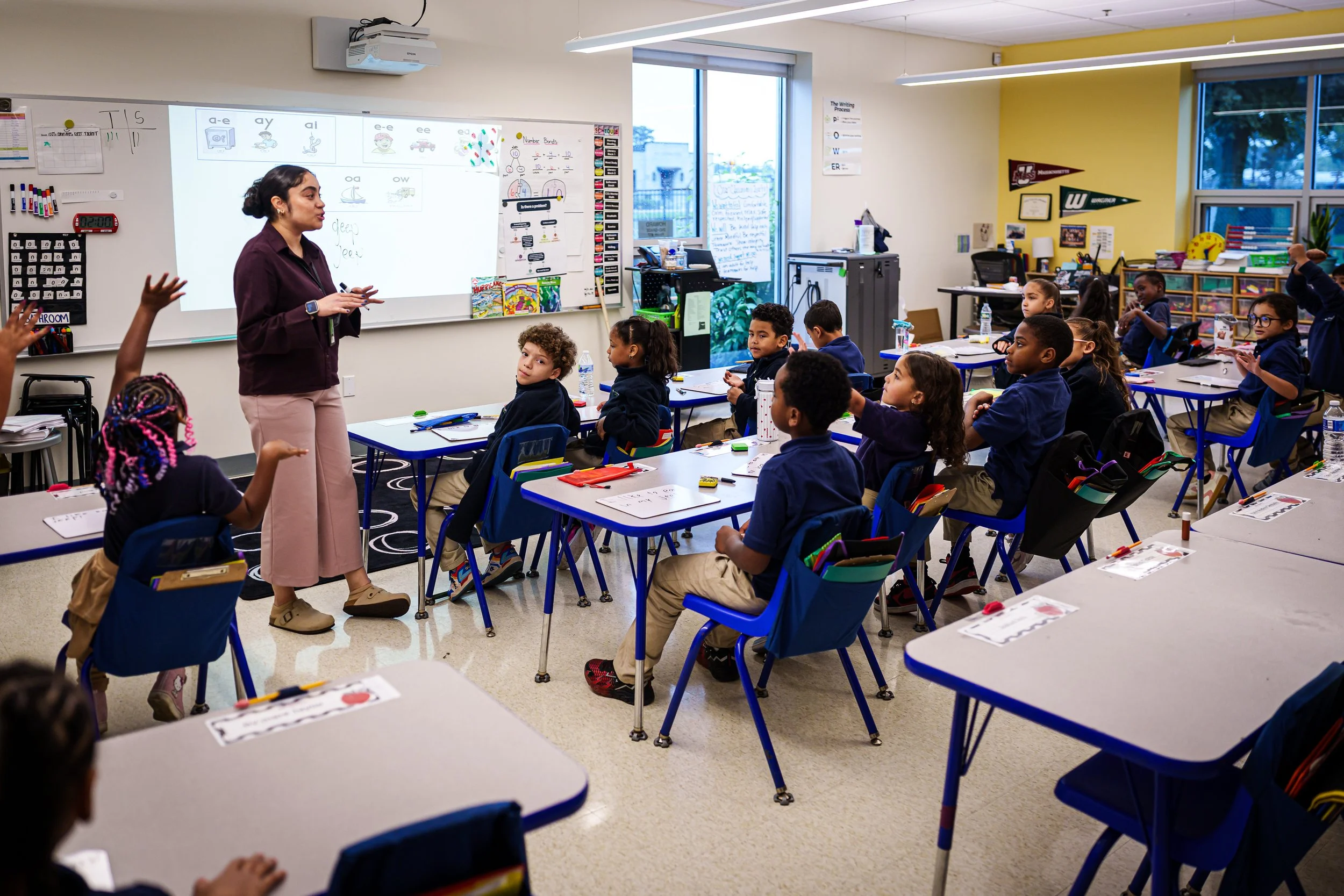
For example, consider the things on the wall in the classroom environment. We don’t always realize how cognitively demanding visual input can be for students, but understanding that everything in the environment can take up mental space helps us to be really thoughtful and strategic about what we’re putting in front of kids and why.
A concrete and bite-sized change for teachers to practice what we preach was a focus on just routines. What are some routines in your classroom that might be taking up kids' brain space? For example, taking out your notebook and a pencil. Is there a way to make that really simple, streamlined, and consistent for kids? So every time you have to do a transition, they're not having to grapple with: Where is my notebook? Where does the pencil go on my desk? What page should I turn to? What do I put on the page? Effective and efficient classroom routines have always been a strength of our school. Through this work, teachers are realizing how important routines are, not just for preserving instructional time, but also for preserving kids’ literal brainspace. Understanding all of this has also helped teachers become more realistic about what they can accomplish in a single lesson.
Why did Springfield Prep choose to focus on the Science of Learning this year?
Jess: In my role, I have the responsibility to make sure that our kids are learning ultimately, and there are a lot of pieces of that. There's a vision for school culture, curriculum, and how those things are implemented in the classroom.
Given our strong teacher retention, we've been able to focus on things beyond classroom management because we've created a lasting, self-sustaining culture. That means we need to take a hard look at other things for explanations for where we're successful and where we're not successful. And despite a track record of strong results over time, there were still students that we consistently weren't reaching, and challenges that were showing up year over year with certain aspects of the content.
When I dug into the latest research on how kids learn best, I discovered that much of the conventional wisdom I had accepted wasn’t actually evidence-based.
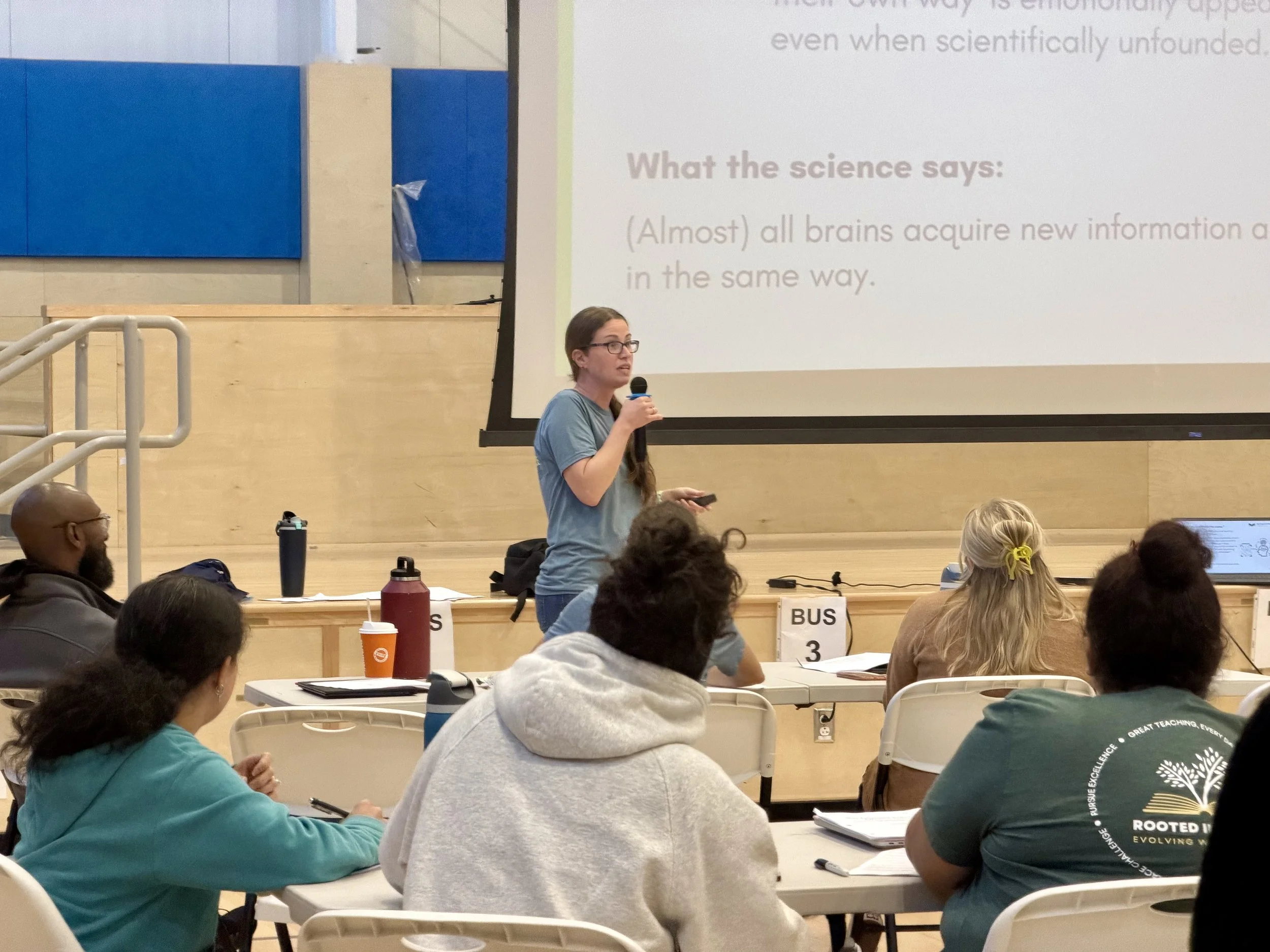
Jess leading professional development on the Science of Learning this August.
Knowing the role that I've played here in building the curriculum and developing teachers, I knew that our team also might have some of these misconceptions, and some of that is because I told them those things. But as my learning deepened, I knew it was my responsibility to correct course, and the timing was right, given the staff that we have and their eagerness for student success.
What research and researchers have been particularly influential in this work?
Jess: Douglas Carnine, who wrote about why evidence-based practices have not always been the thing that education relies on, was a real source of inspiration for me and for how it connects to our mission and serving all students. It's an equity issue to ensure that kids are getting good instruction that is based on evidence and not on vibes.
Others, it depends on the content area, but Sarah Powell has really inspired some of the math work. Zach Groshell helped create a lot of the materials that we used for exploring the instructional hierarchy.
What's something you've learned that challenged or changed your thinking about effective instruction?
Jess: All of it. I was holding deeply to beliefs about kids learning through experience, discovery, and “productive” struggle.
Because I believed those things, and I thought our school did a really good job of those things, I was confounded at how some kids still weren't successful. It was like the same kids were succeeding and the same kids were struggling. So it was validating to realize, oh, that's actually because these practices, which were generally considered to be strong teaching practices, are actually not evidence-based.
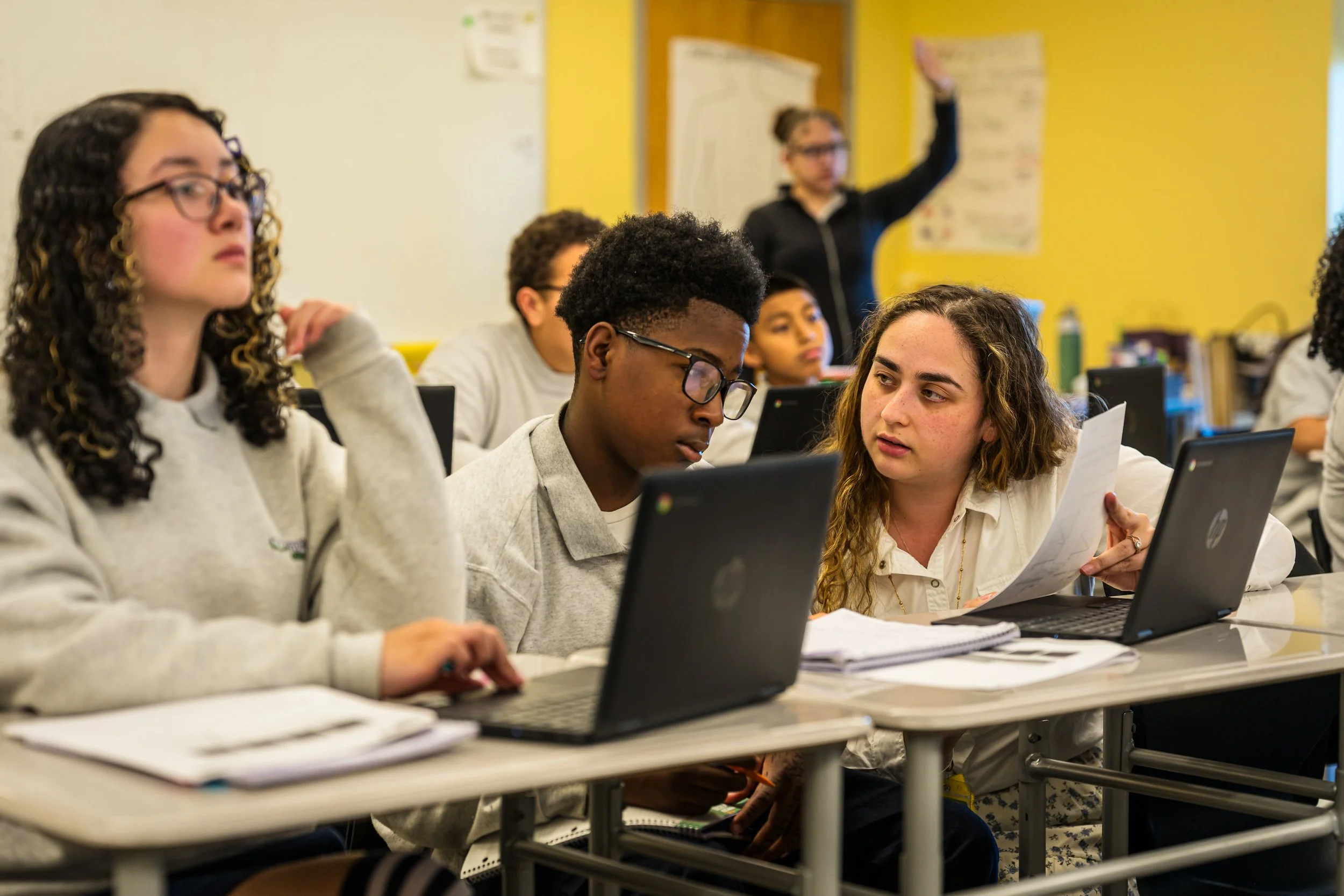
On the flip side, that's what was challenging. We had spent a lot of time, a lot of professional development hours, our evaluation rubrics, our walkthroughs, feedback, all of these things, getting really good at the wrong thing. And that's hard. I had to figure out how to tell people that this thing that I praised you for six months ago, I'm actually going to tell you not to do it in the same way.
But ultimately, these are other people's children and our future doctors and lawyers and nurses. We can acknowledge difficult feelings, but we can’t let them stop us from making the right changes in our practices.
“I had to figure out how to tell people that this thing that I praised you for six months ago, I'm actually going to tell you not to do it in the same way.”
Can you give an example of something you would have praised in the past but would approach differently now?
Jess: An example would be a teacher introducing fractions, and they write one half on the board, and they say something like, "Has anyone ever seen this before?" And students start throwing out some answers, and chances are the highest kids are saying, "That's a half," and other kids are like, "12," "one and two."
Previously, I think I would have praised, "Good, you're not just giving it to them. You have a really neutral face; you're making kids do the lifting. Great, you called on a student to explain their thinking and what they think the one and the two mean."
And now we're 15 minutes into the lesson. Kids have given a lot of incorrect information that has confused kids who were already confused. Kids who know about fractions are sitting there going, "That's wrong," and you haven't actually taught anything, and you've wasted a lot of time.
In the past, I think I would have said, "Kids are struggling, and you're not doing the work for them, and that's great." And now I think, when you know that they don't know what it is, just tell them what it is.
Does that mean there's less room for student discovery and inquiry?
Jess: I would clarify that the Science of Learning doesn't mean that students never have those discovery or inquiry opportunities.
The issue is that many curricula and educators insert discovery and inquiry at the wrong time in students’ acquisition of a skill. That's not a good way to learn something new; rather, it’s a good way to deepen your understanding of something.
The phrase that sticks with me is, "Kids can't connect dots when they don't have the dots yet." I’m telling our team, it’s our job to give kids the dots.
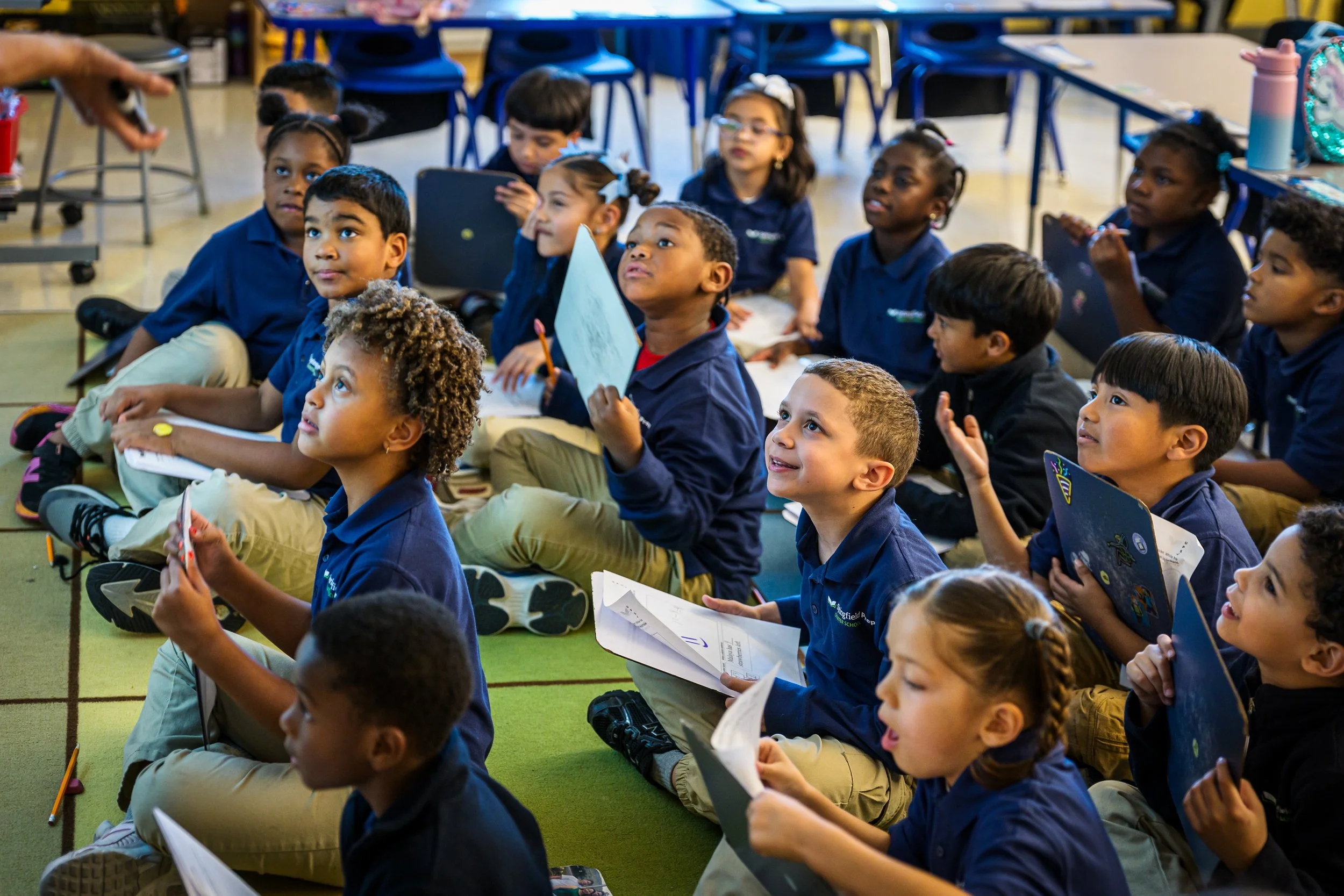
We should serve the most vulnerable learners first with the direct instruction that helps students learn in the acquisition phase. It's not hurting anybody else to get direct instruction. And if that lifts everybody, then everybody is ready for the next thing.
What are some of the bigger changes you're seeing in instruction?
Jess: One simple change is that teachers don't feel as much pressure to go down the rabbit holes when kids are off track.
For example, before, out of an effort to avoid “just giving it to them,” there was lots of time spent pulling the answer out in a roundabout, time-consuming way. And now, teachers know if you're reading, and a kid doesn't know the definition of a word, instead of asking other students to turn and talk with a partner and use context to understand the word, just say, "That word means this…” and move on so the kids have brain space for the important meat of the lesson.
How do you hope this work continues to shape teaching at Springfield Prep this year and beyond?
Jess: There's a reason we didn't approach this with, "And we're replacing this curriculum and this curriculum." This is about informing teachers so that we can turn the dial of our practices, as opposed to a top-down mandate where we flip a switch and expect everything to be different. There will be curriculum shifts in the future. We're constantly evolving our curriculum. But just like we do with anything, we're going to change a little bit, see the impact, and repeat.
We'll continue to come back to the idea that "you haven't taught unless they've learned." That quote reminds teachers of the weight they carry. There's another quote from Science of Learning expert Amanda VanDerHeyden that I see as complementary to this idea: "Learning is the most predictable outcome of highly effective instruction."
For me, that adds another layer of responsibility. As a school leader, it's my job to make sure our teachers have access to the research, knowledge, and support they need to make the most effective instructional decisions possible. We can't just hold teachers accountable for student learning. We have to make sure we're equipping them with the practices most likely to make that learning happen.
“As a school leader, it's my job to make sure our teachers have access to the research, knowledge, and support they need to make the most effective instructional decisions possible.”
Want to learn more? Check out some of Jess’s favorite resources for educators:
Pedagogy Non Grata (Podcast and Blog)
Learning With Mr. Lee (Podcast and blog)
ExplicitInstruction.org (Website with many resources)
RetrievalPractice.org (Website with many resources)
Chalk and Talk with Anna Stokke (Podcast)
